The Rise of Naturalistic Planting and the Gardens of Tom Stuart-Smith
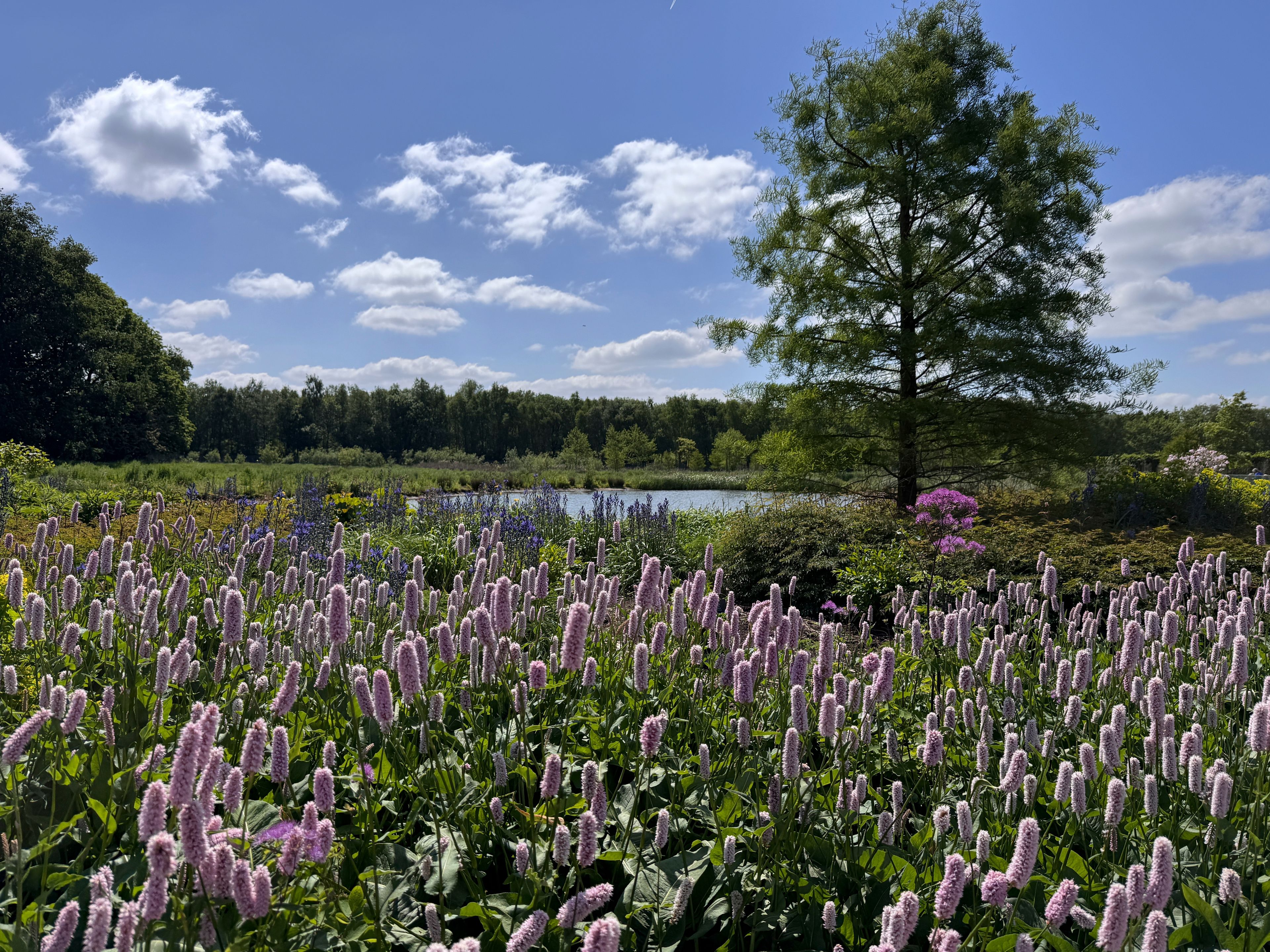
There’s a quiet revolution growing in gardens across the world. Where once we prized clipped symmetry and colour-coordinated borders, today’s most celebrated gardens look, at first glance, almost as though no one has been there at all. Grasses ripple, prickly seedheads wave through winter, perennials weave between one another in loose, unplanned-looking drifts. Yet every stem, every seemingly spontaneous combination, is the result of extraordinarily careful thought.
Welcome to the world of naturalistic planting.
Where Did It All Begin?
The movement has deep roots, but its modern form owes much to a handful of visionary designers working in the Netherlands and Germany in the 1990s. Piet Oudolf, the Dutch plantsman whose work has transformed everything from New York’s High Line to the gardens of Hauser & Wirth in Somerset, became its most recognisable face. His planting philosophy centres on structure, seasonality, and what he calls the ‘matrix’, a shifting, layered tapestry of plants chosen not just for their flowers, but for their form, their texture, and crucially, their behaviour through all four seasons.
Oudolf’s influence spread quickly. In Britain, designers including Tom Stuart-Smith took the principles and made them their own, rooting them in a distinctly British relationship with the countryside and the wider landscape. The result is a style that feels simultaneously contemporary and ancient as though the garden has always been there, shaped by wind and weather rather than human hands.
Why Does It Matter?
Naturalistic planting isn’t just beautiful. It represents a fundamental shift in how we think about what a garden is for. Traditional ornamental gardens placed aesthetics above almost everything else. The naturalistic approach asks a different question: what if a garden could be gorgeous and function as a habitat, a carbon sink, a place where insects, birds, and pollinators thrive alongside human visitors?
The answer is, of course, that it can. Many of the most celebrated contemporary gardens are also among the most ecologically rich, providing year-round food and shelter for wildlife in a way that a neatly deadheaded herbaceous border simply cannot.
The gardens of Tom Stuart-Smith
One of Britain’s most celebrated landscape architects, Tom Stuart-Smith has spent the past three decades refining an approach that sits at the crossroads between the designed and the untamed, gardens that feel as though they have always been there but reveal, on closer inspection, the hand of a carefully thought out design.
His work combines formal structure with naturalism, and it is this tension that gives his landscapes their particular power. He grew up on the Serge Hill estate in Hertfordshire, where four generations of his family have lived and that deep-rooted connection to a particular piece of English countryside has never left him. He read Zoology at Cambridge before completing a postgraduate degree in Landscape Design, a pairing that makes perfect sense when you stand in one of his gardens and sense that the planting has not simply been arranged, but understood, from the roots up.
Discussions about plants and colours are delayed until the later stages of design, sketching initial plans in pencil and working outwards from structure and atmosphere rather than inwards from a wish list of favourite species. The result is gardens that feel rooted in their surroundings rather than imposed upon them.
It is a philosophy that chimes closely with everything we love about wild garden planting, the idea that the gardener’s role is not to impose, but to set a process in motion. As Tom Stuart-Smith himself has put it: “What I am doing as a designer is setting a process in motion, as it were pushing a boat out into the water.” The garden, in his hands, is never quite finished. And that, of course, is exactly the point.
The gardens of Tom Stuart-Smith, including his work at Broughton Grange in Oxfordshire and the RHS Garden Bridgewater in Salford, demonstrate how naturalistic principles translate across very different scales and settings. At Bridgewater in particular, the ambition is breathtaking: a garden that feels simultaneously curated and wild, intimate and vast.